

When Chaun M. (SC # 1115) introduces himself today, he does so with confidence. At 48 years old, he serves as the Administrative Assistant at the Men’s Campus of Healing Transitions, greeting people who walk through the same doors he once did. But the road that led him there was long, painful, and filled with lessons he now uses to help others find their way.
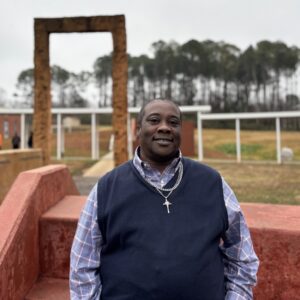
Chaun was born in Baton Rouge, Louisiana, and grew up in a neighborhood where drugs and violence were part of everyday life. As a teenager, he witnessed things no child should have to see, including the death of one of his classmates at just 15 years old. The streets around him were filled with drugs and the people who sold and used them. Even then, Chaun knew he wanted something different.
“I always wanted to be more than that,” he says. For a while, it looked like he might be. Chaun went to college and was close to finishing his degree. But when he took a break from school, the life he had tried to avoid slowly crept in. Drugs entered the picture, first casually, then more often. At the time, it didn’t seem like a problem.
“It was just what we did,” Chaun explains. “Go to work, get high. Go to work, get high. As long as you kept going to work, it felt like everything was okay.”
What started as occasional use became a cycle that lasted more than 25 years. Addiction threaded itself through his life, sometimes quietly, sometimes destructively, but always present. Over the years, Chaun tried different ways to get clean. He went to faith-based programs and outpatient treatment but nothing seemed to stick.
Eventually, addiction began to take over his life. After eight years of sobriety, Chaun had a return to use. In the years that followed, the losses piled up: his home, his marriage, the life he had built. One day, during his lowest point, someone mentioned a place where he could get a meal, take a shower, and sleep. “All they told me was to get on bus 21,” Chaun recalls. “So that’s what I did.” That bus brought him to Healing Transitions.
At first, Chaun wasn’t interested in the long-term recovery program. He completed three days in detox and left. But within 12 hours, he was back. Sitting alone in his broken-down car, the reality of his life hit him with painful clarity.
“You’ve lost your house. You lost your wife. You lost your dog. You’re sleeping in a car that doesn’t run,” he remembers thinking. “What else is left?”
For the first time, Chaun decided to give recovery a real chance.
When he returned to Healing Transitions, he wasn’t sure what to expect. The campus was full of men in recovery, people greeting him warmly, offering encouragement. At first, it felt overwhelming, even strange.
“I remember thinking, what in the world is this place?” he laughs now.
But something about the community stayed with him. Even as he wrestled with shame and fear, people continued to show him kindness. One of the hardest moments came when he finally told his family where he was. His brother, who is nine years younger, shared something that cut deep but ultimately changed Chaun’s life.
“He said he had given up hope for me,” Chaun recalls. “He told me he was just waiting for the phone call saying I was dead.”
That moment became a turning point. Chaun realized he couldn’t keep living the way he had been. For the sake of the people who loved him, and for himself, something had to change.
At Healing Transitions, Chaun discovered what had been missing from his earlier attempts at recovery. The program helped him understand the why behind addiction. Through classes, he learned about the way addiction affects the brain, the phenomenon of craving, and the emotional patterns that drove him to use.
“For the first time, I understood how my mind worked,” he says. Recovery, he learned, wasn’t just about stopping drugs. It meant doing the day-to-day work like attending meetings, building a relationship with a sponsor, helping others, and staying connected to the program.
Along the way, Chaun also found mentors and allies who supported him deeply. As a transgender man navigating recovery in a men’s program, he faced unique challenges. But staff members like Raeford and fellow participants stepped up to make sure he felt safe and respected.
“There were people here who made sure I was okay,” he says. “They had my back.” Those relationships became a source of strength. They reminded him that family isn’t always defined by blood.
Today, Chaun has more than two years of sobriety. When he talks about his life now, his voice fills with gratitude. “It’s amazing,” he says. “I know what it feels like to be free.”
Freedom, for Chaun, doesn’t mean forgetting the past. Instead, he uses it as a reminder of how far he has come. Sometimes he shows new participants the photo taken when he first arrived in detox—thin, exhausted, and weighing just 110 pounds.
“Recovery works,” he tells them.
He never imagined he would one day work at the same place that helped save his life. Now, from the front desk of the Men’s Campus, he sees people arrive at their lowest moments just as he once did. And he knows that a small act of kindness or a listening ear can make all the difference.
“I can’t change the whole world,” Chaun says. “But if I can help one person—and they help one person—then that’s one more life that’s safer.”