

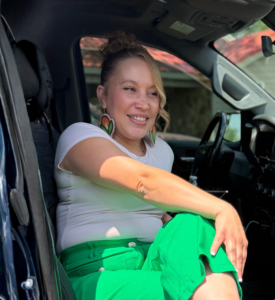
 Meet Courtni W.P. (SC #163). Growing up in Laurinburg, North Carolina, Courtni spent much of her childhood searching for where she belonged. As a member of the Lumbee Tribe, she was proud of her heritage but struggled with self-worth from an early age. Behind the doors of what seemed like a normal home were substance use, mental health struggles, and constant conflict. As the “good kid” who earned good grades and stayed out of trouble, she found herself craving attention in unhealthy ways.
By middle school, alcohol had become an escape. Soon marijuana, pills, and cocaine followed. “I remember the first time I got drunk,” she recalls. “It was the first time I felt free.“
At just 16 years old, Courtni became pregnant. She entered adulthood trapped in an abusive relationship while trying to raise her son. Despite working, attending school, and doing everything she could to provide, addiction continued tightening its grip. When she became pregnant with her daughter, she desperately wanted to stop using. “I cried every night and begged God to help me quit taking pain pills,” she says. “I could stop everything else, but I couldn’t stop those.” She never could—at least not on her own.
Years later, after leaving the abusive relationship, life continued to unravel. She lost housing. Child Protective Services became involved. Her mother passed away. Everything she had built seemed to collapse at once. Rather than pushing her toward recovery, the pain only fueled her addiction.
“I was running from every problem,” she says.
Then someone remembered Healing Transitions.
A man she knew had often spoken about a place that had changed his life. Though he had once experienced homelessness himself, he had rebuilt his future. When Courtni found herself facing a three-week wait for another treatment program, he told her there was somewhere she could go immediately. That place was Healing Transitions.
Before arriving, Courtni attended church one last time. At the end of the service, the pastor shared an unexpected message about olive trees. “An olive tree takes years before it produces fruit,” he said. “But once it does, it continues producing for a lifetime.” Courtni felt like the message was meant just for her.
“I felt like God was telling me this was going to take a long time, and it was going to be hard. But if I stayed with it, it would last a lifetime.”
Recovery wasn’t easy.
“There were days I wanted to leave,” she says. “But I stayed.”
That decision changed everything.
After completing the program, Courtni moved into an Oxford House, reunited with her daughter, and eventually welcomed her son back into her home. She met the man who would become her husband and slowly began rebuilding the life addiction had stolen.
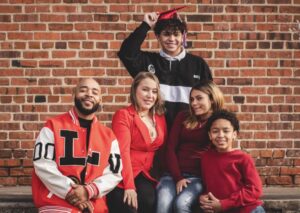
Today, that same woman who once believed she had no future has spent more than a decade helping others find theirs. She worked at Healing Transitions for four years, first on the Rapid Responder Team and later as the Child and Family Services Peer Support Specialist—the very role that once helped reunite her with her own children.
“The woman who helped me get my kids back became my supervisor,” Courtni says. “Then I got to help other mothers reunite with theirs.”
Her impact didn’t stop there. Feeling burdened by the number of overdose deaths in her hometown, Courtni organized community outreach efforts that brought Narcan, recovery resources, and hope back to Scotland County. One man she connected with entered Healing Transitions, completed the program, and was able to reunite with his family.
She earned her associate degree in Human Services, became a Certified Peer Support Specialist, was named The Alcohol/Drug Council of North Carolina’s 2023 Peer Support Specialist of the Year, purchased her first home with her husband, and now serves with Durham County, responding to mental health crises and homelessness instead of traditional law enforcement.
This fall, she’ll begin her social work internship as she continues pursuing her bachelor’s degree. Her children, once the reason she fought for recovery, are now reaching milestones she once feared she’d never witness. Her daughter is starting high school and her son is beginning college at UNC Pembroke.
“I was the one who had to leave him behind when I got sober,” Courtni says through tears. “Now I get to walk him into his college dorm.”
Even after nearly 12 years in recovery, Courtni says life hasn’t been without hardship. In recent years, she has lost loved ones, watched friends die from addiction, and supported a young family member through a serious illness that nearly required a kidney transplant. For the first time in almost a decade, she found herself thinking about alcohol—not because she wanted to relapse, but because she wanted relief from the overwhelming weight of grief.
“I just wanted my mind to stop for a little while,” she says.
Instead of picking up a drink, she leaned on her faith, her recovery community, and the tools she had learned.
“I think people need to know that life is still hard. Some days are harder than others. But I don’t have to drink or use through any of those days. It will work out.”
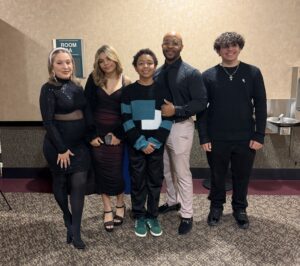 Today, Courtni mentors other women in recovery, just as others once mentored her.She continues to serve, to advocate, and to remind people that recovery doesn’t erase life’s challenges—it changes how we walk through them. Looking back, she no longer sees the frightened young woman trying to numb her pain. Instead, she sees purpose.
“Healing Transitions helped me learn how to take care of that little girl inside of me in healthier ways,” she says. “Now I get to pour that love into my children, my nieces and nephews, and the people I serve every day.”